
Elevated Missionary: Prop Your Hips for Better Angles

Quick Facts
- What It Is: Missionary with your hips raised on a pillow or wedge for a better entry angle
- Also Known As: Propped missionary, angled missionary, pillow missionary
- Difficulty: Simple (well-suited to a range of experience levels and body types)
- Best For: G-spot stimulation, deeper sensation without cervical discomfort, dual stimulation
- Why It Works: The hip tilt redirects the penetrating partner toward the front vaginal wall
- Common Challenge: Finding props that stay put during movement
- Perfect Pairing: A bullet vibrator against the clitoris while the angle handles internal stimulation
What Is the Elevated Missionary Position?
The Elevated Missionary position is a missionary-family variation in which the receiving partner places a firm pillow or wedge under their hips before their partner kneels between their legs. That 4–6 inch lift rotates the pelvis and redirects the angle of entry toward the anterior vaginal wall — the same wall where the G-spot sits. The change is mechanical and simple: same bodies, same position, better angle.
Why the Hip Tilt Changes the Experience
Let's start honest: classic missionary is reliable but geometrically flat. The receiving partner's hips rest at bed level, which means the penetrating partner moves mostly straight back rather than angled upward toward the sensitive front wall.
Elevated missionary fixes that. One prop under the hips shifts everything else.
1. G-Spot Stimulation Becomes Consistent, Not Incidental
Flat missionary treats the G-spot as occasional contact. When the pelvis tilts upward, the angle of entry points the penetrating partner directly along the anterior wall — and that redirection makes stimulation consistent rather than hit-or-miss.
Research indicates that adjusting pelvic tilt during penetration can significantly enhance stimulation of the anterior vaginal wall.
2. Fuller Sensation Without Cervical Discomfort
The elevated angle also shifts the path of entry away from straight-on cervical contact. The result: a fuller sensation with less of the sharp pressure that some people find uncomfortable during deep penetration.
This geometry lets partners explore depth at their own pace, without the need to buffer with hands or create mental distance from sensation.
3. Clitoral Contact Increases
With the receiving partner's hips raised, the penetrating partner's pubic bone sits closer to the clitoris during each movement. That structural proximity means dual stimulation — internal and external — is easier to achieve without repositioning.
Adding a small vibrator against the clitoris during this position is one of the more direct routes to blended stimulation. If that's a goal, see our picks for positions for clitoral stimulation.
4. Hands Stay Free
The position leaves both partners' hands available — for additional touch, directing movement, or adding a vibrator. Nothing is structurally locked or braced, so exploration is easy without interrupting the position.
Setup and Execution
The Setup
- Choose your prop: Firm pillows work. Fluffy ones compress and shift. A purpose-built sex wedge holds its shape through sustained movement and is worth the investment if this becomes a regular position.
- Prop placement: Under the hips and low back, not just the buttocks. You want pelvic tilt, not a shelf.
- Target height: 4–6 inches is a practical starting range. The receiving partner's hips should angle slightly upward; the penetrating partner should need to angle slightly downward to enter. Too low loses the angle; too high strains the lower back.
- Partner positioning: Penetrating partner kneels between the receiving partner's legs, knees tucked under or alongside the elevated hips.
- Leg options: Wrapped around the waist for grinding contact, feet flat on the bed for leverage, or legs resting against the penetrating partner's chest for added depth. Each changes the angle slightly — experiment.
Technique Variations
Grinding rather than thrusting: Instead of in-and-out movement, the penetrating partner stays deep and moves in slow circles or a figure-eight pattern. This maintains consistent pressure against the front wall without the angle breaking between strokes.
Small prop adjustments mid-session: Half an inch of height difference changes the angle noticeably. Slide the prop slightly forward or back to shift where pressure lands.
Troubleshooting
Props Shift or Compress
Stack two firm pillows or use a wedge. A firm folded blanket also works. The problem with most improvised solutions is surface friction — placing a non-slip mat under the pillow prevents migration across slippery sheets.
Slide and Drift
Enthusiastic movement can shift the receiving partner down the bed. The penetrating partner holding the receiving partner's hips adds a physical anchor — it solves the mechanical problem and tends to feel intentional rather than corrective.
Variations Worth Trying
Deep Impact Elevation
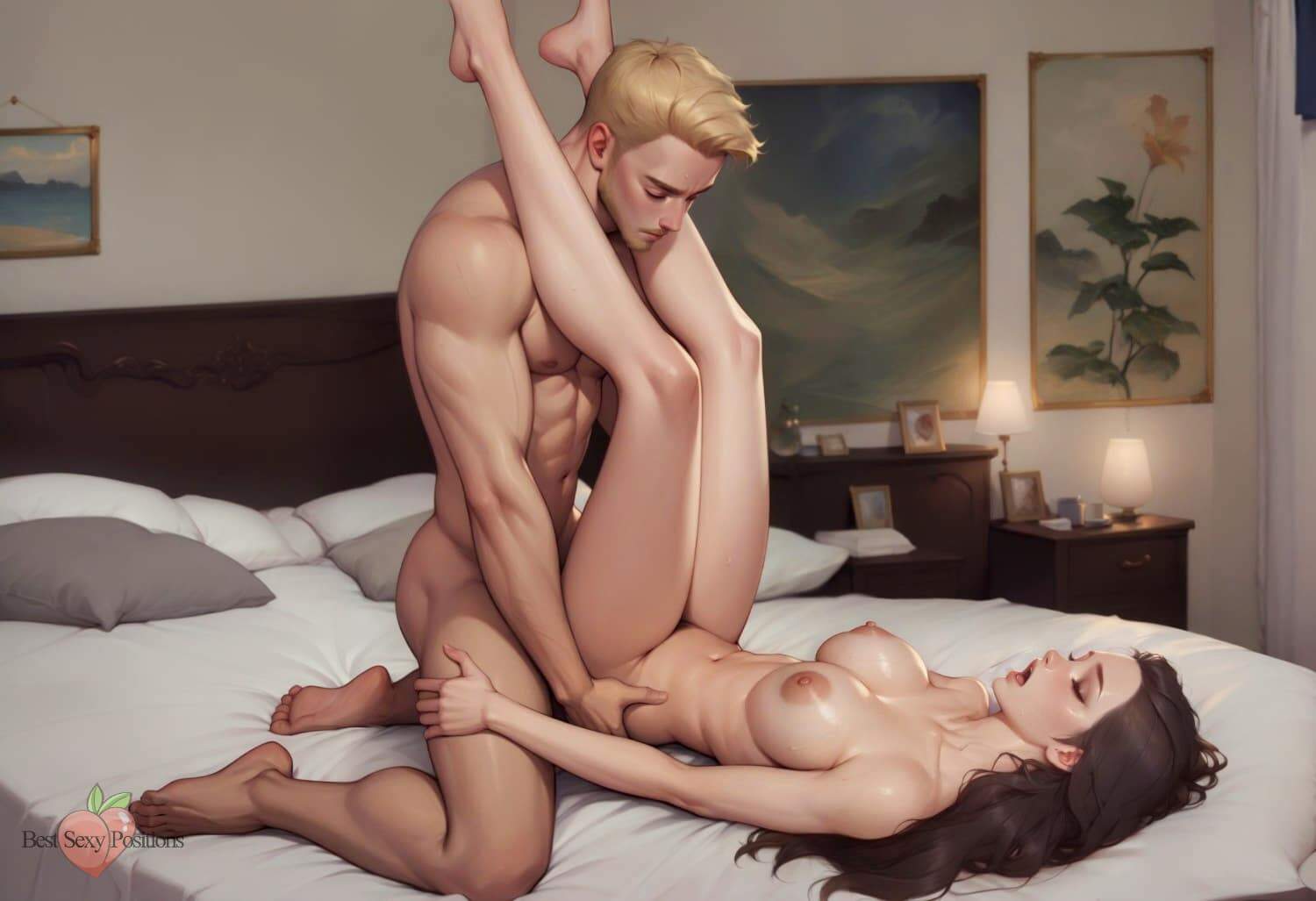
Legs raised straight and pressed back toward the shoulders while hip elevation is maintained. This creates a sharper pelvic tilt and a more direct route toward depth. Related: The Deep Impact position works on the same mechanical principle.
Butterfly Elevation
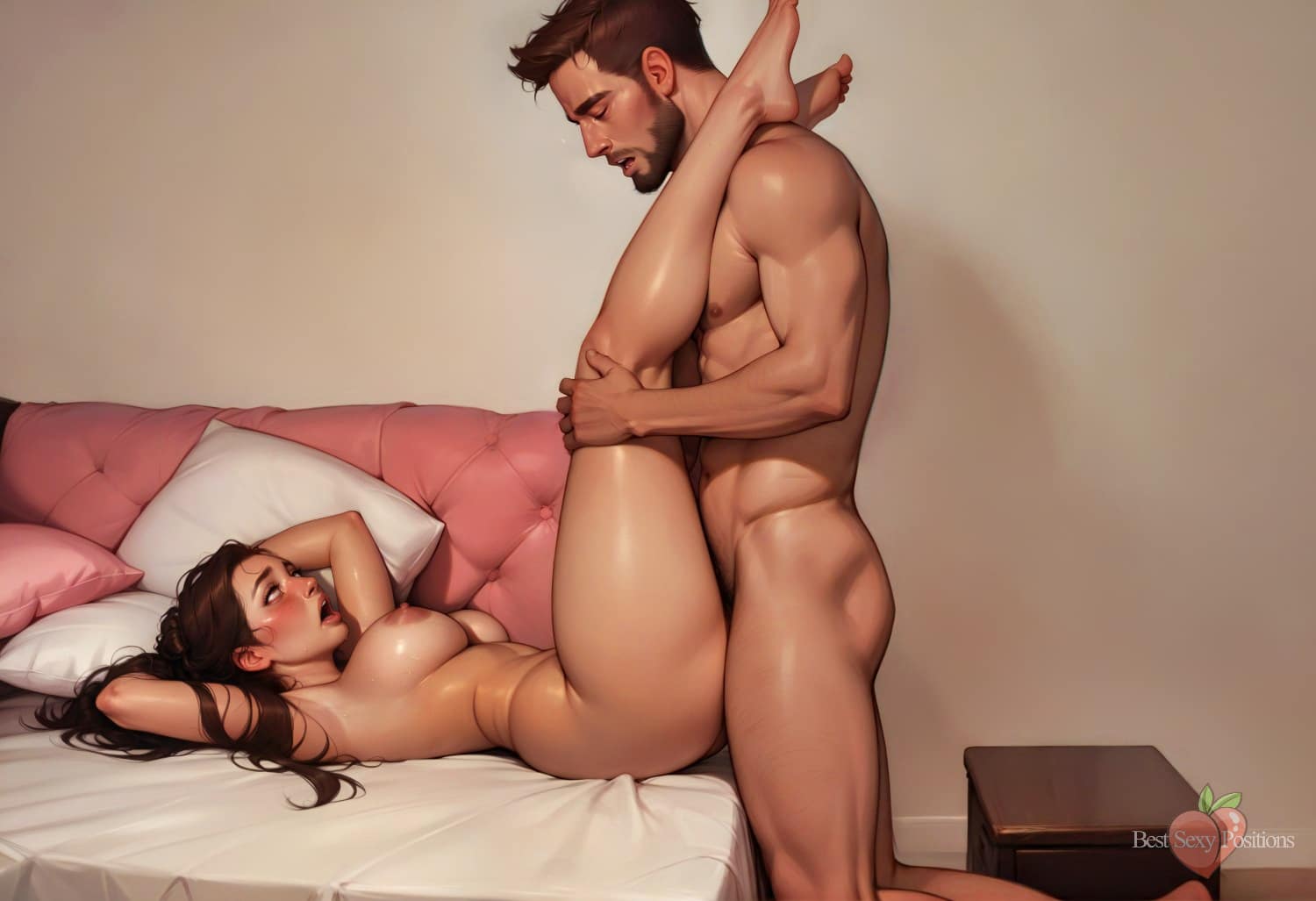
Scoot the propped hips to the edge of the bed; penetrating partner stands. The standing position gives the penetrating partner more leverage and a downward angle that pairs well with the upward pelvic tilt. See the full Butterfly position guide for setup details.
Eagle Variation
For wider leg spread with elevation, the Eagle position combines an open-leg angle with hip lift — useful when the goal is both depth and lateral stretch.
Upgrading Your Props
Sex wedges: Purpose-built for this. They hold angle, resist compression, and don't migrate. If you use this position more than occasionally, a wedge removes most of the troubleshooting.
Specialized position pillows: Contoured to support lumbar and hip simultaneously. More surface area than a standard pillow, which helps with stability.
Improvised options: Rolled yoga mat, firmly folded blanket, firm sofa cushion. All work in a pinch — the key variable is compression resistance, not shape.
Expand Your Repertoire
When you want to explore adjacent positions:
CAT Position

The Coital Alignment Technique shifts the penetrating partner's body slightly forward so their pubic bone rides against the receiving partner's clitoris throughout movement. Unlike standard missionary or elevated missionary (which focus on internal angle), CAT keeps the penetrating partner shallow and prioritizes external friction. The two positions complement each other: elevated missionary for anterior wall stimulation, CAT for sustained clitoral contact. Browse the full missionary family for more angles.
Criss Cross Position

For a variation that changes friction rather than angle. The Criss Cross position crosses the receiving partner's legs, creating sideways pressure and increased tightness while partners remain face-to-face. It pairs well with elevated missionary as an alternative when the goal shifts from targeting the front wall to friction and grip.
Related Reading
- Want depth-focused positions? See our best positions for deep penetration
- Building toward orgasm? Browse best positions for orgasm
- If endurance or pacing is part of the picture, the how to last longer in bed guide covers approaches that work alongside position choice
The BSP Bottom Line
Elevated missionary is a geometry adjustment, not a different position. The receiving partner lifts their hips; the angle of entry shifts toward the anterior vaginal wall; stimulation that was incidental becomes consistent. That's the whole mechanism.
What makes it practical is accessibility. No flexibility requirement, no endurance demand, no specialized skill. A firm pillow or wedge, a few minutes of setup adjustment, and the angle difference is immediately noticeable.
Our take: Elevated missionary earns its place through anatomy — tilting the pelvis changes the entry angle so that movement connects with the front vaginal wall more directly than flat missionary does. Experiment with prop height and leg position until the angle lands where you want it. The mechanics do the work; the calibration is yours.