
11 Plus-Size Sex Positions That Work With Your Body
Plus size sex positions using real body mechanics: angles, pillow support, and leverage for deeper comfort and pleasure. 11 positions, body-positive guide.

Quick Facts
- What It Is: A roundup of sex positions chosen for body-positive mechanics — angles, edge-of-bed entry, and leverage that work with plus-size anatomy
- Also Known As: Curvy body positions, comfortable sex positions for larger bodies, body-positive sex positions
- Difficulty: Easy to moderate (no contortion required)
- Best For: Anyone wanting positions where the geometry fits, not just ones that technically work
- Core Mechanic: Pelvic tilt, pillow support, and entry angle — not body size — determine comfort and depth
- Common Challenge: Finding angles that reduce compression while maintaining deep contact
- Useful Setup: Firm pillow or wedge under hips, non-slip mat for standing variations, sturdy chair for seated positions
Plus Size Sex Positions: What the Mechanics Actually Are
Plus size sex positions are standard positions where setup geometry — pillow placement, entry angle, edge-of-bed positioning — is adjusted so comfort and depth work together. The core mechanics apply to every body: pelvic tilt determines where penetration lands; partner distance controls depth; friction surface governs sensation. What changes is the arrangement, not the position itself.
Research published in Body Image links higher body satisfaction with more positive sexual experiences — not as a prerequisite, but as a reinforcing loop. The positions below are organized by what they actually do mechanically, not by how they look.
This guide is part of the full positions library and connects to our broader roundup of comfortable side sex positions and positions for limited mobility.
11 Sex Positions That Work With Plus-Size Bodies
Modified Missionary
The Mechanic: The penetrating partner braces on their forearms rather than lowering their full weight onto their partner's torso. This creates a gap between bodies that allows the receiving partner to tilt their pelvis and control how penetration lands.
Wrap your legs around your partner's waist to draw them in and control angle. The space between bodies also frees both hands for additional stimulation.
Why It Works: Arm-brace entry eliminates torso compression, and a pillow under the receiving partner's hips tilts the pelvis forward — redirecting thrust toward the anterior vaginal wall with less depth strain. Eye contact and close proximity are fully preserved.
Setup Tip: Slide a firm pillow or folded towel under your hips before you begin. This single adjustment changes where penetration lands more than any rhythm or speed variation. See more angle variations in the classic missionary guide.
Edge of Glory / Butterfly Position
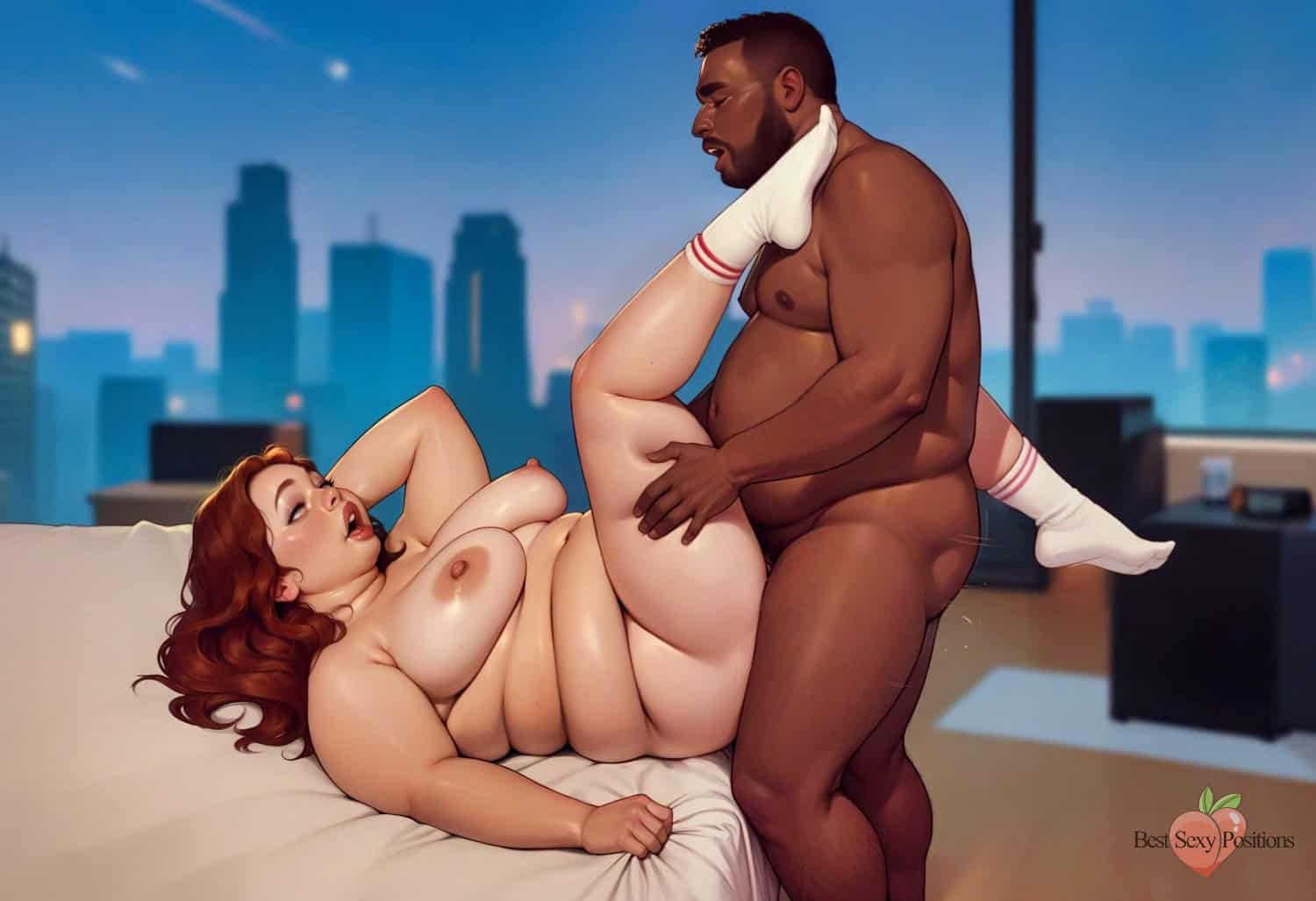
The Mechanic: The receiving partner lies at the edge of the mattress while the penetrating partner stands or kneels on the floor. This removes mattress compression entirely and eliminates weight-bearing for the receiving partner.
The standing partner controls angle and depth from a stable base; the receiving partner can rest completely.
Why It Works: Floor-based entry gives the standing partner a straight line of thrust without fighting mattress sink, and the hip height is adjustable by having the receiving partner raise or lower their legs. Hands are free on both sides.
Setup Tip: Rest legs on your partner's shoulders or chest based on what keeps your hips at a comfortable angle — flexibility is not required. Explore the full range of edge-of-bed mechanics in the butterfly position guide.
Doggy Style
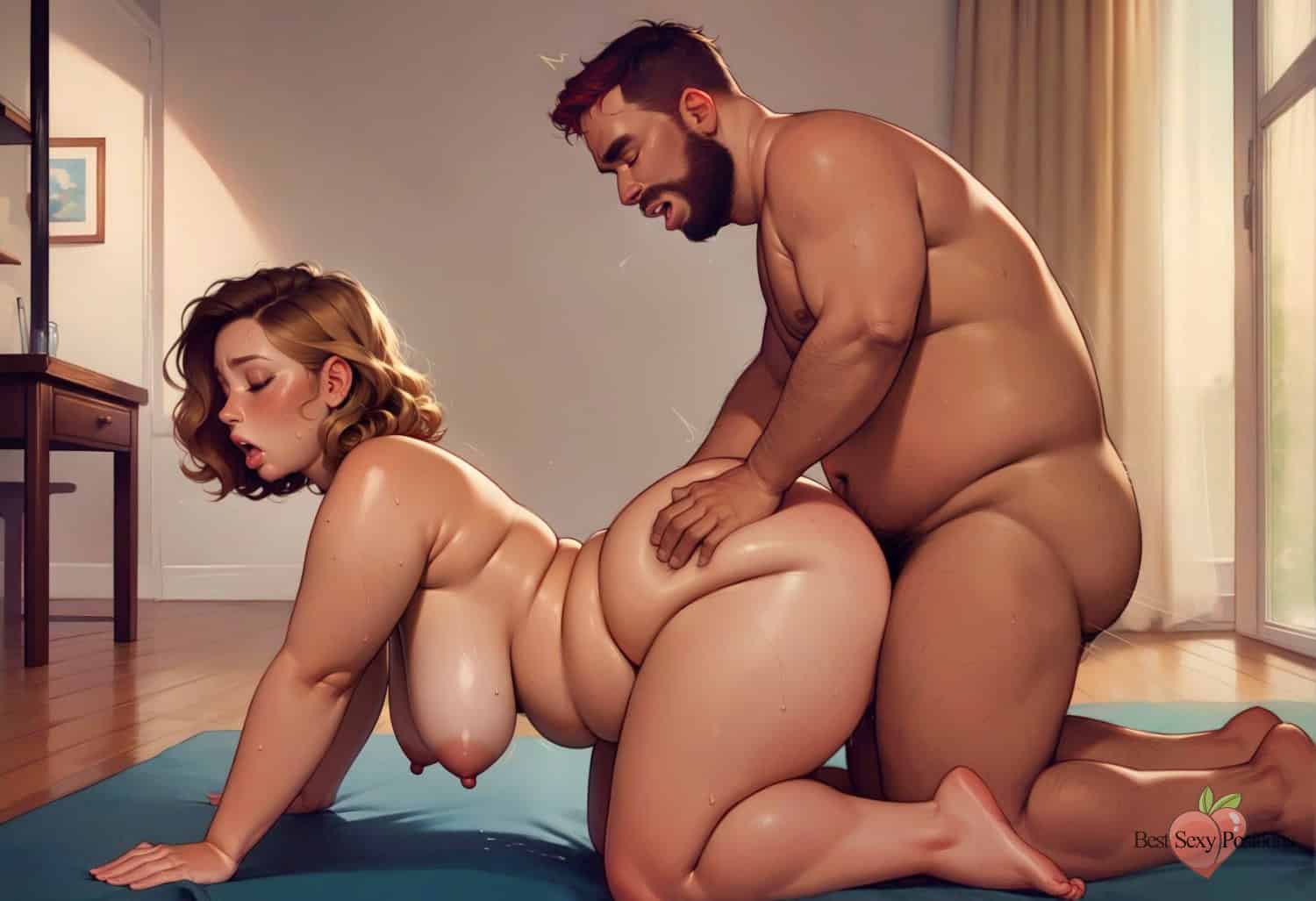
The Mechanic: Rear entry with the receiving partner on hands and knees. The penetrating partner approaches from behind with both hands free to hold the hips and control rhythm.
The natural lumbar curve of the receiving partner's back creates an angle that directs penetration anteriorly — toward the front vaginal wall — with each thrust.
Why It Works: Depth is high in this configuration, and the entry angle is consistent regardless of partner size because the hip-to-hip geometry is determined by the receiving partner's back angle, not by torso shape. Hip-width positioning adjusts tightness of sensation.
Setup Tip: If knees fatigue, drop to forearms — this deepens the lumbar curve slightly, which can increase the anterior-wall contact described above, and shifts more weight onto the upper body.
Cowgirl Position

The Mechanic: The receiving partner straddles the lying partner and controls depth, speed, and angle from above. Weight is distributed across both knees, not concentrated on one point.
Rocking forward shifts contact toward the clitoral area; sitting upright increases depth. Both adjustments are available mid-position.
Why It Works: Top-rider control means the receiving partner can self-regulate depth at every moment — particularly useful when deep penetration is uncomfortable. Gripping a headboard transfers some weight off the knees and onto the arms if thigh fatigue sets in.
Setup Tip: Circular grinding often maintains more consistent clitoral friction than vertical bouncing and uses less thigh energy. The cowgirl classic guide covers grip mechanics and hip-angle variations in detail.
Reverse Cowgirl Position
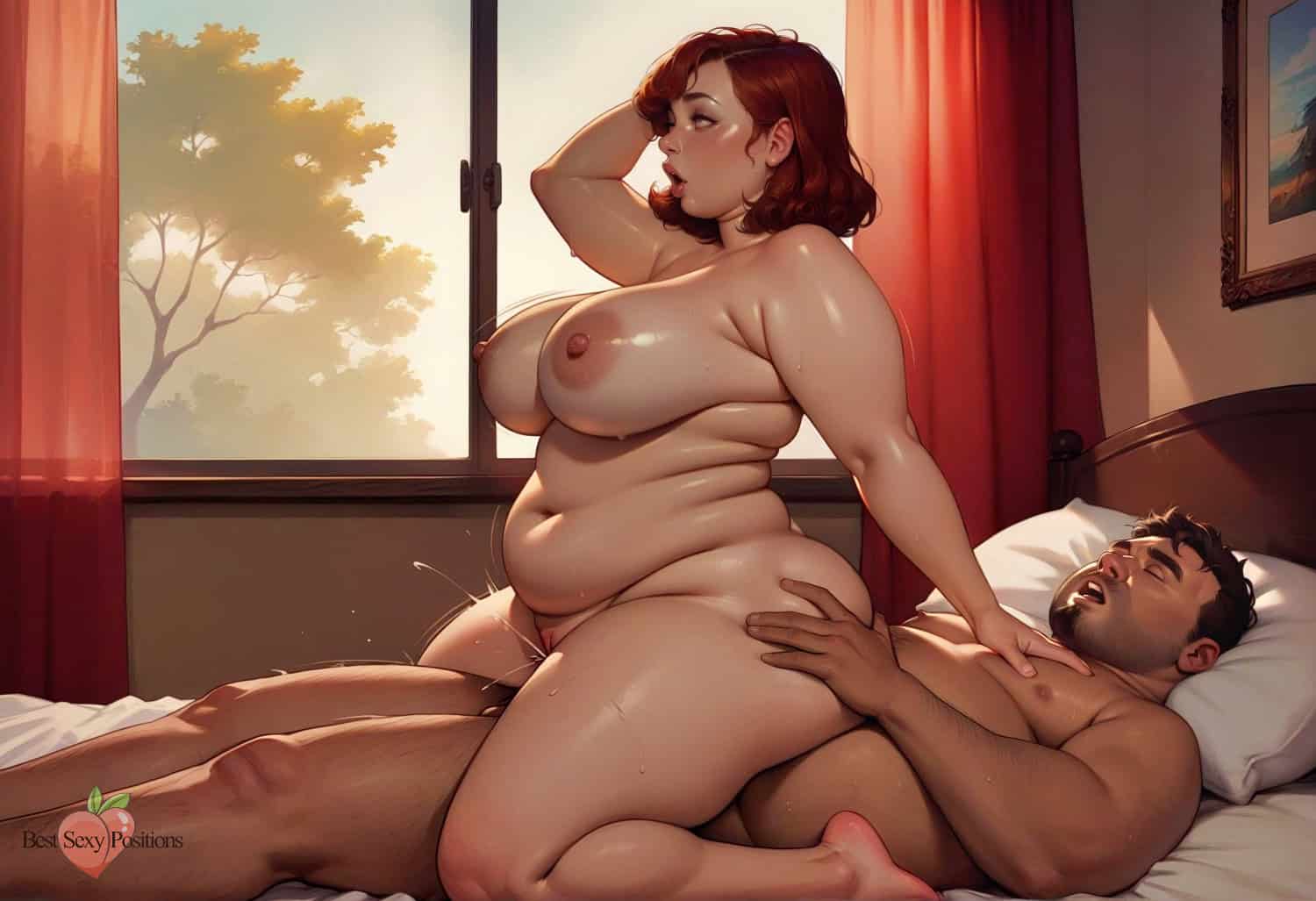
The Mechanic: Same top-rider structure as cowgirl, but the receiving partner faces the lying partner's feet. This reverses the entry angle — penetration is directed toward the posterior vaginal wall rather than the anterior wall.
When both partners have larger abdomens, facing away removes that contact point entirely, which is the primary practical advantage of this variant for plus-size couples.
Why It Works: Leaning slightly forward in this position creates additional space and shifts the angle of penetration, and the lying partner can reach around to provide clitoral stimulation without awkward arm positioning. The receiving partner retains full pace control.
Setup Tip: Lean forward about 20–30 degrees from upright to find the angle that feels best — the entry direction changes noticeably with small forward/back shifts. Full mechanics in the reverse cowgirl guide.
Betty Rocker Position
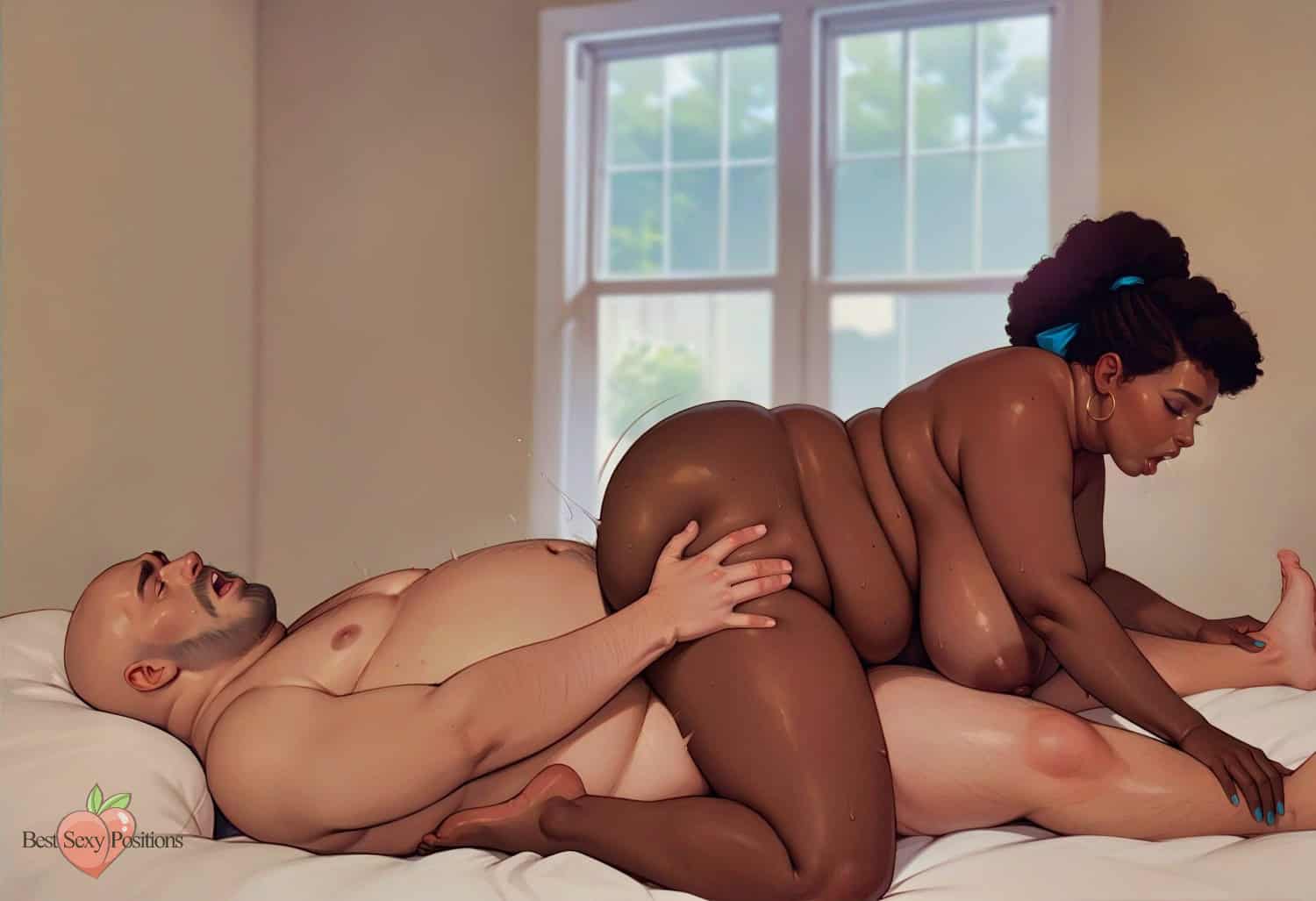
The Mechanic: A cowgirl variant where the receiving partner leans forward onto their forearms or the partner's chest, shifting weight distribution forward and changing the entry angle to target the anterior wall more directly.
The forward lean also creates space between abdomens, which is useful when both partners are larger.
Why It Works: Weight transfers partially onto the arms, reducing thigh load. The rocking motion — forward and back rather than up and down — maintains continuous internal friction and keeps clitoral contact with the partner's pubic bone throughout. Full position mechanics in the Betty Rocker guide.
Setup Tip: Drop to forearms for a steeper forward angle — this narrows the space between bodies but increases anterior-wall contact. Finding your forearm position takes one or two tries; the difference in sensation once you hit it is clear.
Pretzel Position
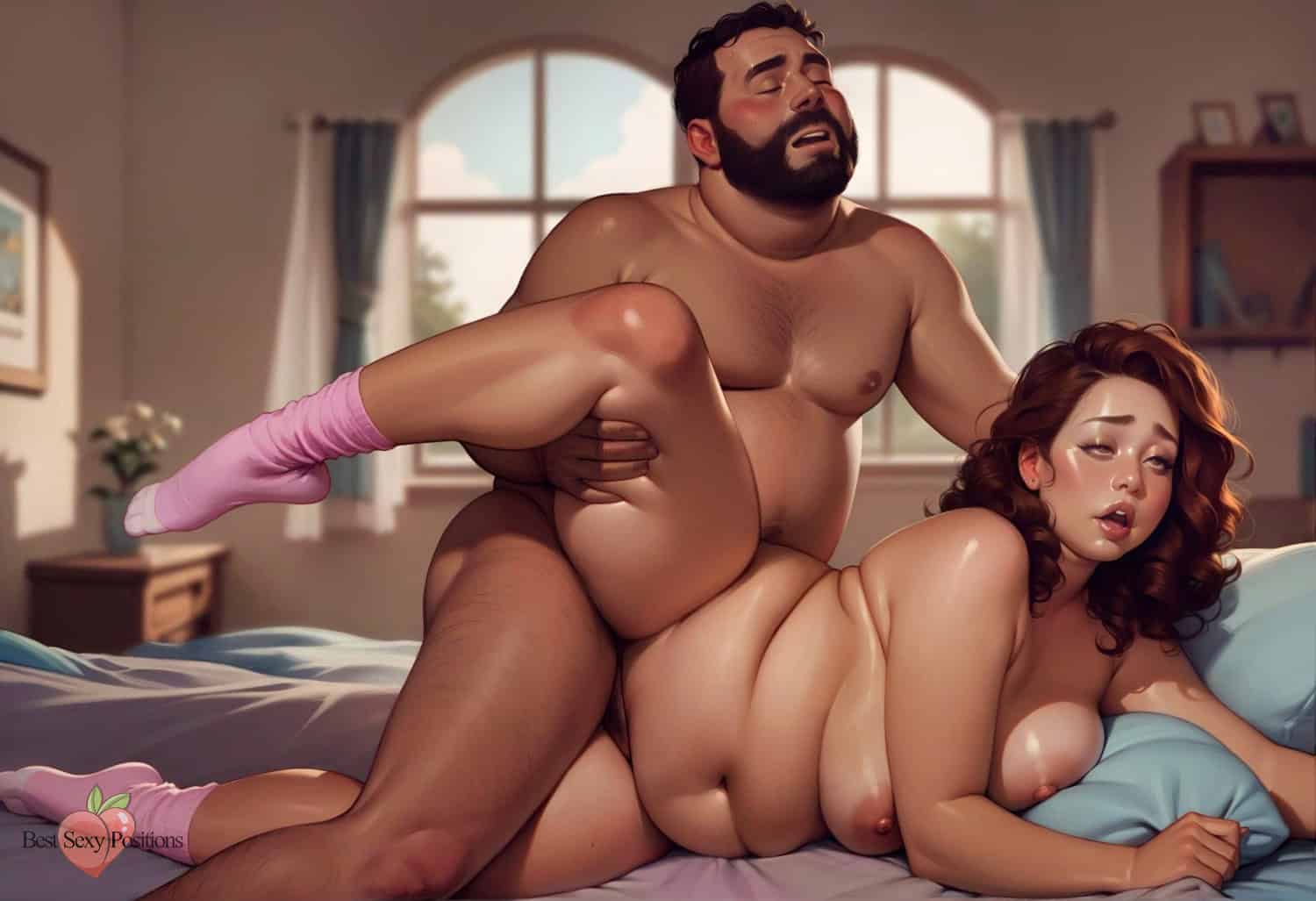
The Mechanic: The receiving partner lies on their side with one leg raised; the penetrating partner kneels and enters from the side-rear angle. This is a hybrid between side-lying and rear entry, combining the low-fatigue profile of spooning with deeper penetration depth.
Neither partner bears weight on the other. The raised leg controls the tightness of the entry channel — higher means tighter.
Why It Works: Side-lying removes all weight-bearing pressure while the angled entry maintains more depth than standard spooning. The lying partner's torso is fully supported and can remain completely relaxed throughout.
Setup Tip: A pillow under the raised knee reduces hip-flexor fatigue during longer sessions. For more side-lying positions that share this low-effort structure, see our comfortable side sex positions roundup. (Note: the dedicated pretzel guide is currently in preparation.)
Lap Dance Position
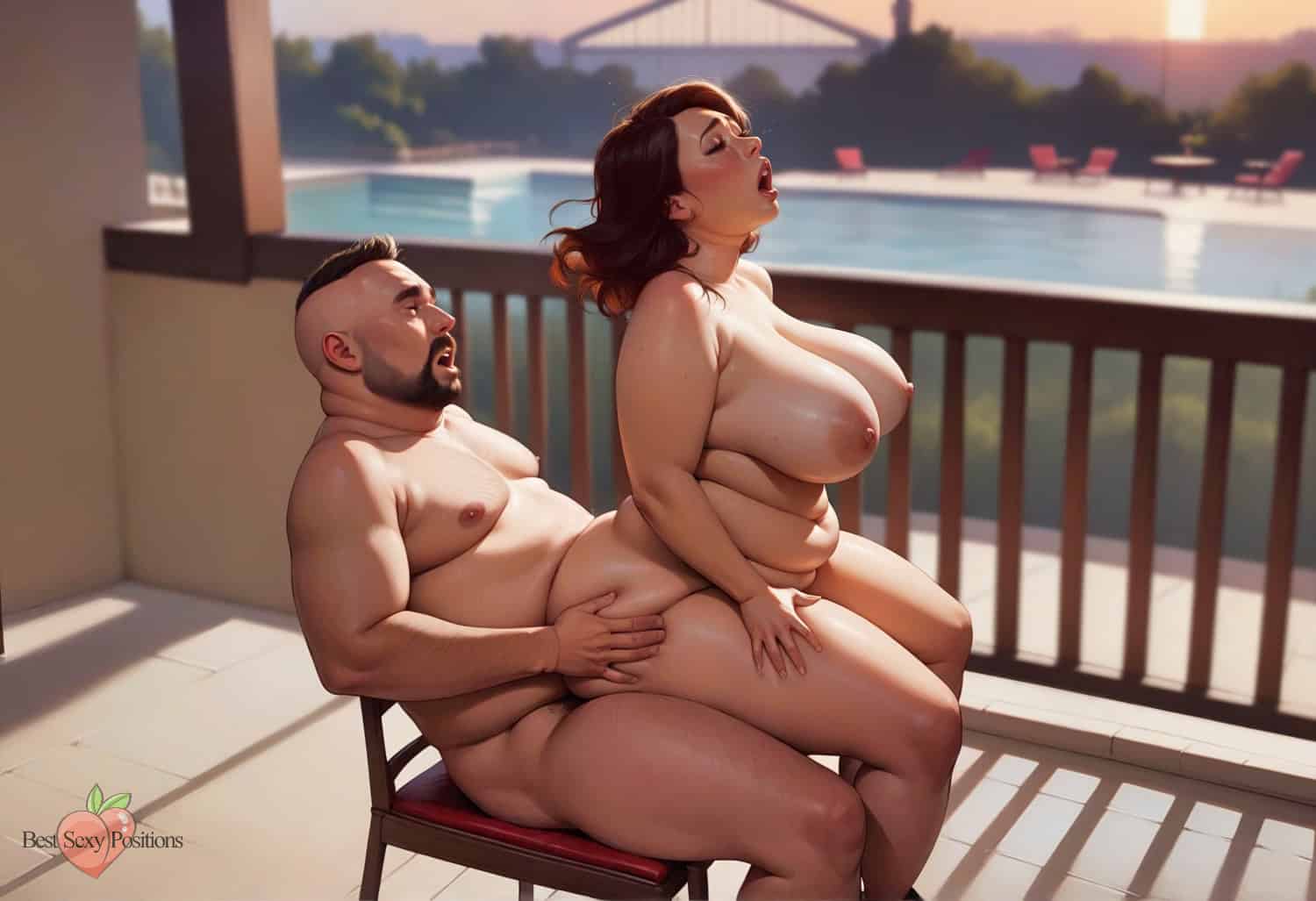
The Mechanic: The penetrating partner sits in a sturdy chair; the receiving partner straddles their lap facing away. Weight distributes across the chair seat rather than concentrating on knees or a mattress.
The seated configuration limits vertical travel but creates consistent depth with each forward-back grind, and the chair back gives the penetrating partner a stable brace.
Why It Works: Chair height determines the angle: a lower seat tilts the receiving partner forward more, which changes entry angle; a standard seat height keeps the receiving partner upright and gives a clean line for deep grinding. The receiving partner leans back against their partner for full-back contact. Full mechanics in the lap dance guide.
Setup Tip: A chair with arms lets the receiving partner grip for balance and offload thigh effort. Test chair stability before committing — legs should not flex under combined weight.
Spooning Position
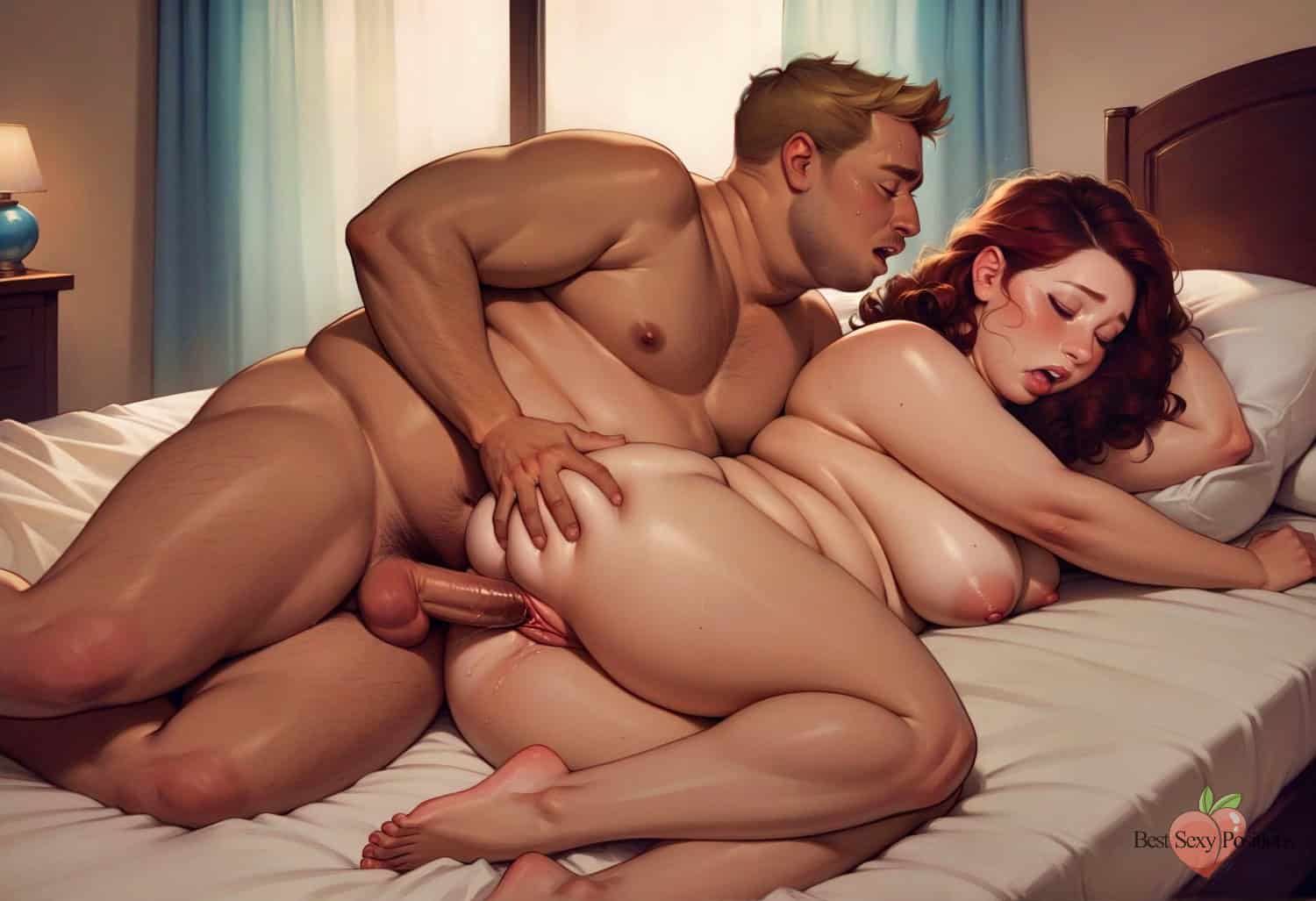
The Mechanic: Both partners lie on their sides facing the same direction; the rear partner enters from behind. Penetration depth is shallower than rear-entry positions with the receiving partner prone, but the sustained pressure and slow rhythm create a different quality of sensation.
Neither partner supports the other's weight. This is the most sustainable configuration for extended sessions.
Why It Works: Full-body contact is maintained along the spine, hips, and legs. The penetrating partner can reach around for manual stimulation of the clitoris without repositioning. Lifting the top knee slightly or draping it over the partner's hip opens the entry angle and increases depth. See additional side-lying mechanics in the spooning guide and the comfortable side sex positions roundup.
Setup Tip: A pillow between the knees keeps the hips stacked and reduces lower-back rotation during longer sessions — particularly useful if either partner has hip or lumbar sensitivity.
Standing Position (Wall Support)
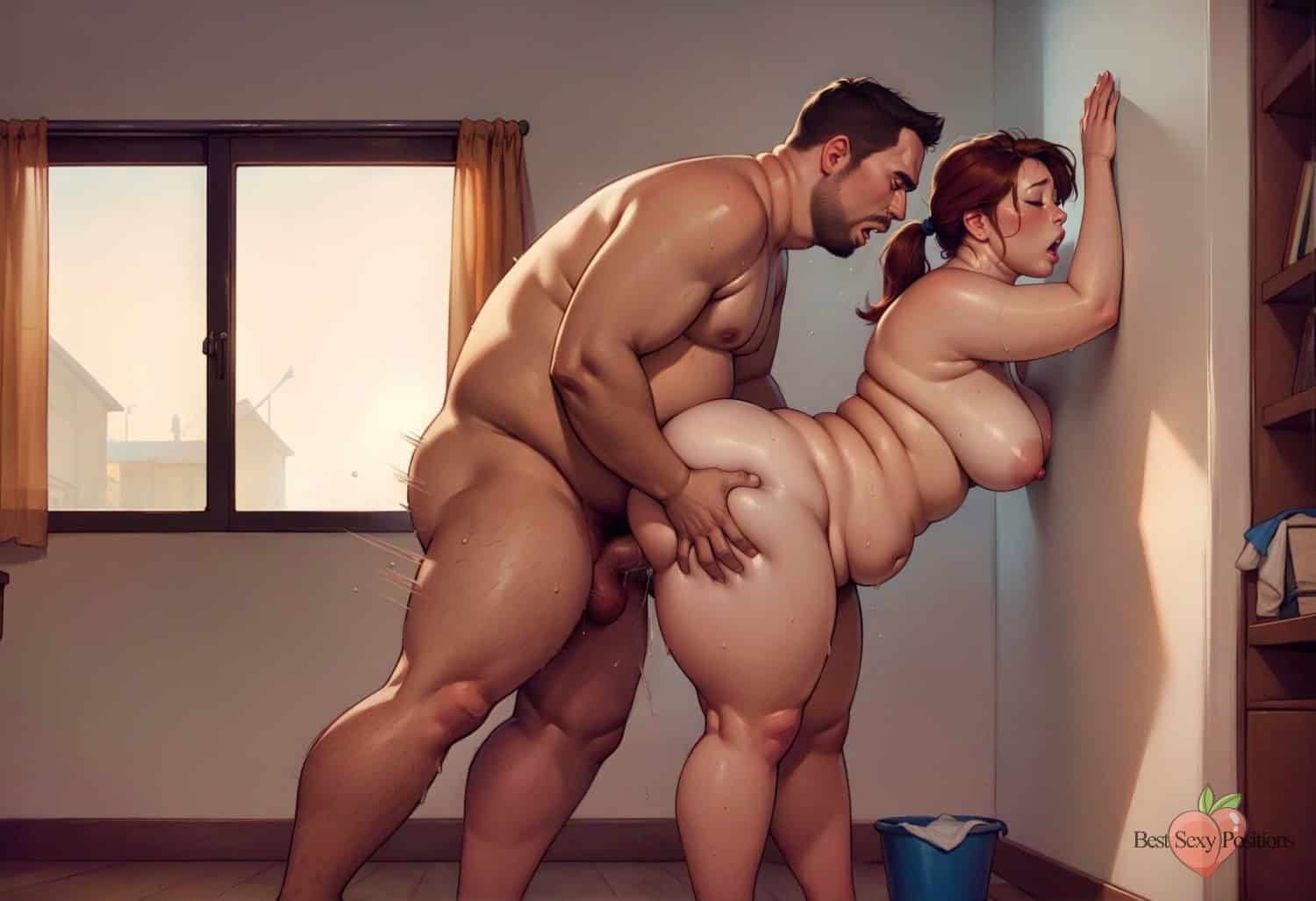
The Mechanic: The receiving partner stands facing a wall with hands braced against it; the penetrating partner enters from behind. The wall handles forward weight load, and both partners remain on their feet.
Entry angle is controlled by the receiving partner's forward lean — more forward tilt brings the hips back and adjusts penetration direction toward the anterior wall.
Why It Works: Standing rear entry produces a different sensation profile than floor-level rear entry because the hip-to-hip geometry changes with both partners upright and the entry is more horizontal. Furniture (counters, bed frame, bathroom vanity) can replace the wall and adjust height for different partner proportions.
Setup Tip: A non-slip bath mat prevents foot movement on hard floors. If height difference makes the geometry awkward, one partner standing on a low step or book evens things out. For low-effort alternatives in a similar spirit, see positions for limited mobility.
Side-by-Side Scissors

The Mechanic: Both partners lie on their sides facing each other with legs intertwined. Rather than deep penetration, this position creates external genital contact and a grinding motion — clitoral stimulation is the primary mechanic for the receiving partner.
Rhythm is cooperative: both partners move together, and neither partner supports the other's weight.
Why It Works: The scissors configuration is one of the few positions that works equivalently across all body types because it does not rely on penetration depth or limb length — it relies on pelvic-to-pelvic contact and synchronized movement. Sustained pressure and circular grinding build arousal gradually.
Setup Tip: Circular hip movement maintains more consistent contact than linear thrusting. This position works well as a warm-up or as a lower-energy option mid-session. (Note: the dedicated scissors guide is currently in preparation.)
How Pillow Support and Angle Adaptation Actually Work
The recurring advice across these positions — pillow under hips, lean forward, edge of bed — shares a single underlying mechanic: changing pelvic tilt changes where penetration lands. A pillow under the hips in missionary or butterfly tilts the pelvis anteriorly and reduces the angle of entry, which shifts friction toward the front vaginal wall. Leaning forward in cowgirl-style positions does the same thing from above. The edge of the bed removes mattress compression from the equation, letting the penetrating partner find a clean geometric line without fighting the surface.
A second study published in Body Image found that body image during sexual activity — not just general body image — predicts sexual satisfaction. This is the argument for starting with positions where the mechanics are working clearly, because that tends to reduce cognitive distraction and keep attention on sensation.
Lubrication matters across all these positions. Silicone-based lube outlasts water-based during longer or more friction-intensive sessions; water-based is required if silicone toys are in use. For anal play specifically, the anal canal produces no natural lubrication — reapplication throughout is not optional.
When the Geometry Isn't Working
Depth feels too intense: Reduce entry depth by placing your hand as a bumper at the base of the penetrating partner's body. This is faster and more adjustable than repositioning.
Fatigue cuts sessions short: Switch between active and passive roles. Cowgirl transitions to missionary; standing transitions to edge-of-bed lying. Managing effort across roles extends duration without requiring higher fitness.
Angle alignment is off: Before committing to a full reposition, try one pillow adjustment or a 10-degree forward lean. Small geometry changes have larger-than-expected effects on where friction lands.
What Plus-Size Bodies Bring to These Positions
- Natural leverage in top-rider positions comes from hip width and thigh-to-seat contact area — more base means more stable grinding
- Additional friction surface in skin-to-skin contact positions means more tactile input per movement
- Curves that affect entry geometry in rear-entry positions, directing thrust along a path shaped by the receiving partner's anatomy rather than requiring geometric precision from the penetrating partner
- More stable platform in seated and edge-of-bed configurations where mass provides momentum
The shift from treating these as accommodations to treating them as mechanical advantages is what body satisfaction research consistently points toward: the outcome is better when the frame is "what does this body do well" rather than "what does this body require."
Practical Notes
- Lubrication: Use it for all penetrative play; reapply as needed. Silicone-based for longer sessions (incompatible with silicone toys). Water-based otherwise.
- Communication: Real-time direction — "deeper," "slower," "more to the left" — is faster and more accurate than repositioning and restarting.
- Comfort as information: Discomfort during a position is data about the angle, not a verdict about the position. Adjust, then assess.
- Stopping is always the right call: If something hurts sharply, stop. Dull muscle fatigue is manageable; sharp or internal pain is a signal to change position or pause.
The Mechanical Case for These 11 Positions
These positions aren't a separate category — they're the mainstream positions whose geometry happens to work most cleanly with larger bodies. Modified missionary and butterfly use the edge-of-bed or arm-brace setup to eliminate compression. Cowgirl and its variants put pace and depth control with the partner who needs them. Side-lying positions remove weight-bearing entirely. Scissors provides a non-penetrative option with reliable friction mechanics.
The body you have is the one these mechanics work with. There is no preparatory version of yourself required.