
Basset Hound Sex Position: Deep Pleasure, Minimal Effort
Quick Facts
- What It Is: The relaxed doggy variation where the receiving partner's chest rests on the bed while the penetrating partner kneels behind
- Difficulty: Simple and comfortable (well-suited for low-energy sessions)
- Best For: Deep rear-entry stimulation without requiring arm or core strength from the receiving partner
- Also Known As: Collapsed doggy, passive rear entry, lazy doggy style, tired doggy position, relaxed doggy, chest-down position
- Physical Mechanic: Chest-flat posture tilts the pelvis upward, sustaining a consistent penetration angle
- Common Challenge: Finding the right pillow height to keep hips elevated comfortably
- Perfect Pairing: Bullet vibrators for clitoral stimulation, soft silk restraints for gentle bondage, and warming massage oils for enhanced relaxation
What Is the Basset Hound Sex Position?
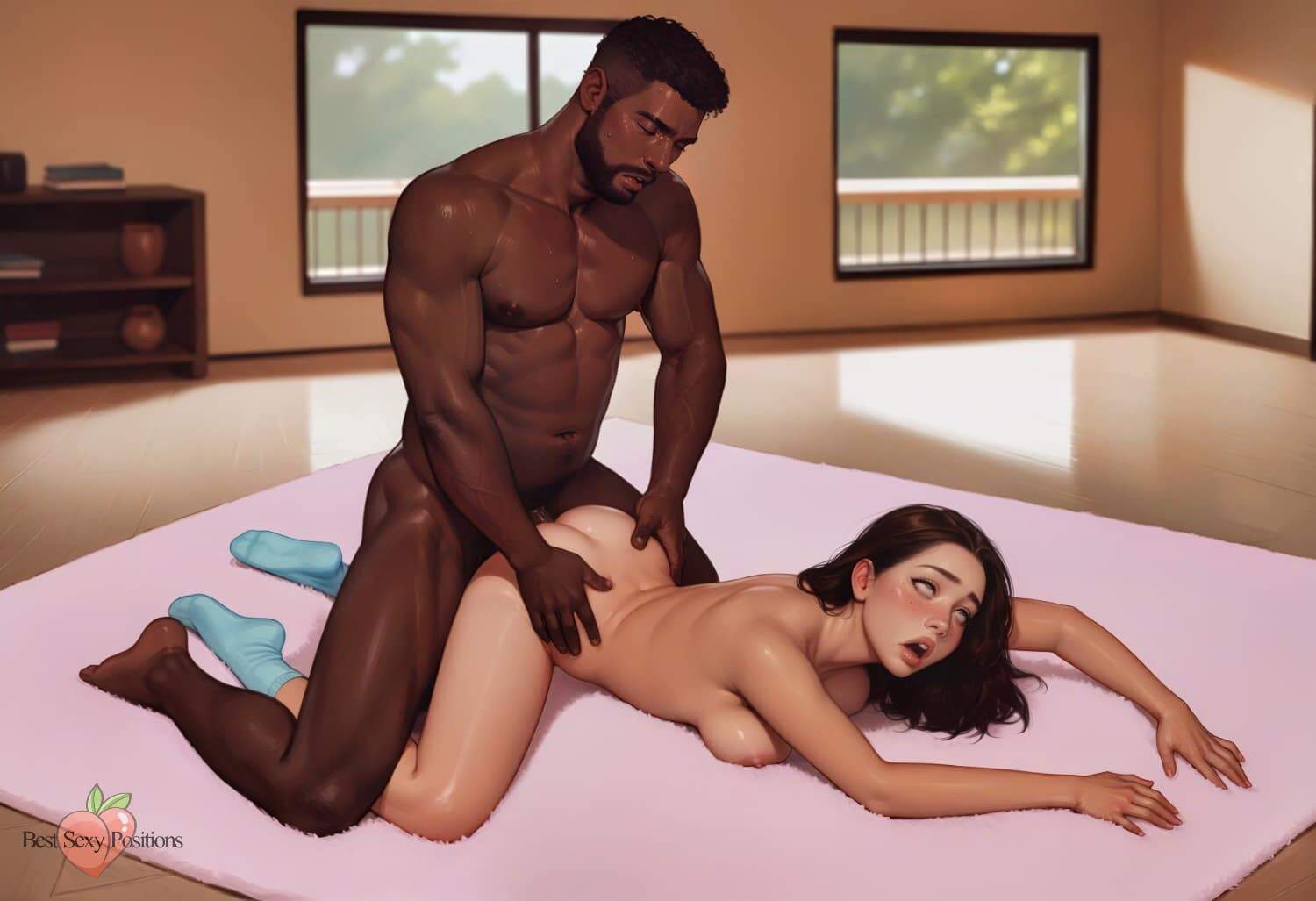
The Basset Hound sex position is a rear-entry variation of doggy style in which the receiving partner lies chest-down on the bed with hips lifted, while the penetrating partner kneels upright behind them. The chest-flat posture eliminates the need for arm support, reduces physical demands on the receiving partner to near zero, and sustains a consistent pelvic tilt that keeps stimulation angle steady throughout. It is one of the lowest-effort rear-entry options available.
Getting Into Position
The Receiving Partner
Lower the chest to the bed: Start on hands and knees, then let the chest drop flat. Arms can rest at the sides, extended forward, or tucked — whichever is comfortable. The head turns to one side.
Keep the hips lifted: While the upper body rests fully, the hips stay elevated. This creates the characteristic slope from raised hips to the resting chest that defines the position.
Spread knees for stability: Knees wide enough to maintain balance while the upper body is fully relaxed. A pillow under the hips can hold the angle if thigh muscles fatigue.
Let the body settle: The natural drape of the torso does the work. There is no need to hold any particular pose once the chest is down and hips are up.
Sound and response: With no effort going into support, full attention goes to sensation and response — a functional advantage, not just a comfort one.
The Penetrating Partner
Kneel upright behind: Position centrally, upright, with a clear view of the receiving partner's posture. Adjust knee spread to match the height of the receiving partner's hips.
Hands on hips or lower back: Provides stability and connection. Light pressure helps maintain the position's angle without pushing the receiving partner's hips down.
Begin with slow, controlled movement: The flat-chest posture means even small movements translate directly — starting gradually lets both partners calibrate depth and angle.
Read body feedback: Breathing pattern, muscle tension, and small postural shifts indicate comfort and preference. The receiving partner's hands are free to signal adjustments.
Pace is adjustable: The position handles both sustained slow movement and faster tempo; pace can vary throughout without requiring a position change.
Why People Choose This Position
For the Receiving Partner
No arm or core load: The chest-on-bed posture removes all upper-body weight-bearing. People with wrist, elbow, shoulder, or lower-back issues that make standard doggy style difficult often find this a workable alternative. A Physical Therapy journal study on positioning for people managing chronic musculoskeletal conditions supports the general principle that reducing load on joints during physical activity helps sustain comfort over time.
Consistent stimulation angle: The fixed pelvic tilt holds penetration angle steady without the receiving partner needing to actively maintain it.
Hands-free clitoral access: Both arms are free, making direct clitoral stimulation or toy placement straightforward — a practical advantage for orgasm for people with vulvas in rear-entry positions.
Low physical threshold: Suitable for fatigue, recovery days, or any situation where energy is limited but physical intimacy is desired.
For the Penetrating Partner
Full control of pace and depth: With the receiving partner fully stationary, movement is entirely the penetrating partner's to direct — useful for people who prefer to set the rhythm precisely.
Hands free to roam: Grip on hips is optional. Both hands can move to the receiving partner's back, sides, or hair.
Sustainable duration: The upright kneeling posture is less tiring than positions requiring the penetrating partner to support their own weight over the receiving partner.
Adapts to any pairing: Works with natural anatomy, strap-on harnesses, or toys regardless of gender combination.
How Basset Hound Compares to Other Doggy Style Positions
Here's how these four doggy variants actually differ, arranged from lowest to highest effort:
| Position | Chest Position | Effort Level | Who Moves |
|---|---|---|---|
| Basset Hound | Flat on bed, arms limp | Minimal — near-total passive | Penetrating partner only |
| Lazy Dog | Resting on forearms | Low | Mostly penetrating partner |
| Classic Doggy Style | Held up on hands | Moderate to high | Both partners |
| Bulldog | Upright, deep arch | High, compact | Both partners, intense |
The key difference: Basset Hound = chest completely flat. Lazy Dog = chest on forearms. Classic Doggy = hands-up. Bulldog = chest upright with deep squat.
The Gentle Control Dynamic
Transitioning Into the Position
From standard doggy style, the penetrating partner places one hand between the receiving partner's shoulder blades and guides the chest down slowly. This should feel supported, not pushed. Once settled, pause before resuming movement so the receiving partner can confirm the position is comfortable.
Maintaining Connection
With the receiving partner largely stationary, touch becomes the primary connective signal. One hand resting on the lower back or hip communicates presence. Verbal check-ins remain useful — ask about depth, pace, and comfort directly rather than inferring.
Rhythm and Variation
Begin with slow, even strokes to establish the angle. Once both partners are settled, tempo can increase or vary. Short pauses between rhythm changes give the receiving partner time to register sensation rather than adapting to constant change.
Adapting for Different Bodies
Height Differences
If there is a significant height difference, the receiving partner may need a folded pillow or wedge under the hips to bring the pelvis to a workable height. The penetrating partner can adjust knee spread and upright angle to compensate.
Pillow Strategy
Under the hips: Maintains the elevation without hip flexor effort. A firm pillow or positioning wedge works better than a soft one that compresses.
Under the chest: Adds comfort if the mattress is firm. Keeps breathing easy and reduces pressure on the sternum.
Between the knees: Useful if hip abduction becomes uncomfortable over time.
Joint Considerations
Knee discomfort for the penetrating partner can be addressed with a folded blanket under the knees. The receiving partner's knees can also be cushioned if the surface is hard. Memory foam positioning cushions are designed for this use case.
Practical Setup
Lubrication
Quality lubricant is functional, not optional. The flat-chest posture keeps the receiving partner largely stationary, which means natural lubrication may need supplementing over a longer session. Water-based lubricant works for most pairings; silicone-based lasts longer but is incompatible with silicone toys. For anal use, a thicker formula is appropriate — see our anal sex guide for product selection detail.
Temperature
The receiving partner generates less body heat in this position due to minimal movement. Keep the room warm or have a light cover accessible.
Cleanup
Place a towel within reach before starting. Breaking from the position mid-session to locate supplies disrupts both the physical and attentional state of the receiving partner.
Communication Protocol
Agree on a simple signal before starting — a hand squeeze, a word — so the receiving partner can pause or redirect without needing to shift posture entirely to communicate.
Common Friction Points
"My hips keep dropping": The hip elevation is the functional core of this position. Add a firm pillow or wedge under the pelvis. If hips still drop, the receiving partner can try a slight knee-spread increase to redistribute weight.
"The angle feels off": Adjust the penetrating partner's upright height (lean slightly forward or backward) and re-angle before resuming. Small changes in the receiving partner's knee width also shift penetration angle.
"Breathing feels restricted": The chest is flat on a surface — ensure the head is turned fully to one side, not face-down. A very flat pillow under the collarbone (not the face) keeps the airway clear.
"I want more sensation": The position's stimulation is consistent rather than variable. For more intensity, try short pauses followed by resumed movement (contrast effect), or introduce a vibrator. Deeper penetration is available by asking the receiving partner to arch the lower back slightly.
"I feel disconnected": The physical separation of eye contact is a real trade-off in all rear-entry positions. Mitigate with voice — narrating what feels good, asking questions, or maintaining verbal contact. Turning the receiving partner's head to enable occasional eye contact also helps.
Variations
Side Glance
The receiving partner turns their head to one side and the penetrating partner leans forward slightly over them. Creates intermittent eye contact and adds a sense of closeness without fundamentally changing the position's mechanics.
Wandering Hand
The penetrating partner releases grip on the hips and lets one or both hands move — up the receiving partner's back, into their hair, or reaching around underneath for additional stimulation. Requires the penetrating partner to maintain balance through hip movement alone.
Supported Arch
Instead of lying completely flat, the receiving partner places a firm wedge under the pelvis and keeps a slight arch in the lower back. This increases the pelvic tilt and can deepen penetration or shift the stimulation angle.
Your Body, Your Rules
Comfort is functional: This position works specifically because the receiving partner is fully at ease. Discomfort in knees, hips, or lower back should prompt immediate adjustment, not endurance.
Duration varies: Start with 10–15 minutes and gauge how both partners feel. Some will want longer sessions; others prefer this as a transitional position within a longer encounter.
Pregnancy: The position keeps abdominal pressure low, which many people find comfortable in the second and third trimesters. Consult your healthcare provider about what is appropriate for your specific stage of pregnancy — individual circumstances vary significantly.
Not for everyone: People who find passive roles psychologically uncomfortable may prefer positions with more reciprocal movement. The Jockey position and Prone Bone offer similar rear-entry angles with slightly more mutual engagement.
The Real Talk
The Basset Hound position is a practical rear-entry option, not a complicated one. Its design — chest flat, hips up, penetrating partner in control of movement — produces consistent stimulation with minimal physical demand on the receiving partner. The same mechanics that make it accessible for people with physical limitations make it appealing for low-energy sessions more broadly.
The position is worth understanding on its own terms: it is not a compromise version of doggy style. It is a distinct configuration with a different distribution of effort and a different quality of sensation. Whether it becomes a regular fixture or an occasional option depends on what both partners are looking for on a given day.
For positions that share the relaxed rear-entry quality, the Lazy Dog and Prone Bone are the closest neighbors. For the full range of options in this style, the doggy style positions hub covers all published variations.
For curated lists that include this position, see best sex from behind positions, best deep penetration positions, and best anal pleasure positions.
Other Similar Positions to Explore
- Kneeling Embrace

A kneeling variation of spooning with rear entry. Both partners kneel upright for body-to-body contact and a different angle of stimulation.

A close, controlling rear-entry variation with the receiving partner flatter and the penetrating partner positioned slightly over them.
For more variations and techniques within this category, explore the complete doggy style positions collection.
Our take: The Basset Hound earns its place in the rear-entry category on straightforward mechanical grounds: the chest-down posture naturally eliminates upper-body effort, sustains pelvic tilt without active maintenance, and frees both the receiving partner's hands for additional stimulation. Adjust pillow placement, pace, and depth to what works for the specific bodies involved.
Your Questions Answered
How is this different from just lying flat (prone bone)? In the Prone Bone position, the receiving partner is fully flat — legs together, hips at mattress level. In the Basset Hound, the hips stay elevated with knees spread, creating the pelvic tilt that makes rear entry at that angle functional. Prone Bone compresses the angle; Basset Hound sustains it.
What if the receiving partner feels too passive? Passivity in this position is a physical configuration, not a mental state. The receiving partner can actively direct pace through verbal feedback, squeeze a hand to signal, or introduce their own hand for stimulation. Short-duration sessions at first help people calibrate how much stillness they are comfortable with before committing to longer ones.
Can this work for same-sex couples? Yes. The position is defined by body geometry — one partner chest-down with hips elevated, the other kneeling behind — and adapts to strap-on harnesses and toys as readily as to natural anatomy.
Is this position good for people with mobility issues? It removes the wrist, elbow, and shoulder load of standard doggy style, which makes it more accessible for people with upper-body joint issues. Hip and knee comfort still need to be managed with appropriate cushioning. Anyone with a specific condition should confirm suitability with their physiotherapist.