
12 Woman on Top Sex Positions for Control and Pleasure
Woman on top sex positions put clitoral contact and G-spot angle entirely under your control. 12 riding variations with technique cues for every level.

Quick Facts
- What It Is: A roundup of 12 woman on top sex positions that put the rider in control of depth, angle, rhythm, and clitoral contact
- Also Known As: Female dominant positions, rider positions, cowgirl variations, woman superior positions, girl on top positions
- Difficulty: Beginner to advanced — this guide covers the full range
- Best For: Clitoral stimulation, G-spot targeting, building sexual confidence, exploring control dynamics
- Key Mechanic: When on top, the rider controls pelvic tilt — small forward or backward lean shifts internal pressure and clitoral contact, which is why these positions work structurally, not just symbolically
- Common Challenge: Thigh fatigue before orgasm (solved by switching from bouncing to grinding — see FAQ below)
- Toy Pairings: Bullet vibrators for clitoral contact during grinding, couples vibrating rings for hands-free stimulation, wand vibrators in low-effort positions, positioning pillows for angle adjustment
Woman on Top Sex Positions — The Short Answer
Woman on top sex positions give the rider direct control over pelvic tilt, grinding rhythm, and penetration depth. That control matters anatomically: leaning slightly backward in cowgirl angles internal pressure toward the anterior vaginal wall (G-spot zone) while a forward lean brings the pubic mound into contact with the clitoris. No other category of position puts both variables in one person's hands simultaneously.
Research from Psychology & Sexuality shows that women who embrace sexual agency report significantly higher satisfaction rates and more frequent orgasms. The positions below are grouped by effort level and mechanical function — not just difficulty.
For a complete breakdown of riding technique across all variations, see our guide to riding positions and control.
Getting the Mindset Right First
The single biggest variable in woman-on-top positions is not technique — it is attention. When you stop monitoring how you look and start tracking what you actually feel, the feedback loop improves immediately. Specific things to attend to: the angle of pressure, where friction peaks, whether you are grinding or bouncing, and whether you want more depth or more clitoral contact at a given moment. That active attention is what makes the control real.
Communication that helps:
- Name the sensation: "That angle — right there, keep that."
- Set expectations before starting: "Tonight I'm leading, you follow my pace."
- Check in during: "Don't move yet — I'm finding the angle."
The more precisely you can narrate what is working, the faster you get there consistently.
12 Woman on Top Sex Positions
1. Classic Cowgirl Position

Classic cowgirl is the baseline from which all other riding positions derive — which is worth taking seriously, not treating as a starter default. Kneeling astride your partner with your hands on their chest, you control every variable: depth, speed, angle, and how much grinding versus bouncing you mix in. Leaning forward brings the clitoris into contact with the pubic bone below; leaning back shifts the angle toward the anterior wall. Most people find their first reliable G-spot sensation by experimenting with a 10–15 degree backward tilt from upright.
For grinding mechanics in detail — including pubic-bone pressure and hip-rocking technique — our classic cowgirl guide covers the full range of variations.
2. Reverse Cowgirl Position
Turning around changes the geometry meaningfully. In reverse cowgirl, the penis or strap-on curves toward the front vaginal wall from the start, which means G-spot contact is available without needing the backward lean that classic cowgirl requires. Leaning forward onto your hands increases that anterior pressure further and also frees the clitoris for direct touch. The trade-off is reduced face-to-face feedback, which some people find liberating and others find disorienting at first. Start with feet flat on the bed rather than kneeling — the squatting variation gives you more leverage for controlled movement.
More on angle variations and leg positioning: reverse cowgirl techniques.
3. Amazon Position

Amazon is reverse cowgirl with the receiving partner in a deep squat and the penetrating partner's knees bent up toward their chest. That knee-bend compresses the shaft into a steeper upward angle, intensifying anterior wall pressure. It is the most depth-and-G-spot-focused position in this guide, and also the most physically demanding — it uses glutes, quads, and hip flexors hard. Short pulses work better than full-range bouncing here; the deep squat position means you do not need large movements to feel significant sensation.
Full setup and support options in the Amazon position guide.
4. Betty Rocker Position

Start in reverse cowgirl, then pitch your weight forward onto your hands and knees — the angle drops the front of the shaft toward the anterior vaginal wall with consistent, sustainable pressure. The rocking motion (forward and back rather than up-down) is low on thigh fatigue and high on G-spot contact. Betty Rocker is the position most people discover accidentally when reverse cowgirl starts to tire — the forward lean is an instinctive compensation that happens to be mechanically excellent. It also leaves the clitoris accessible for toy use or manual stimulation.
More on the rocking technique and clitoral mechanics: Betty Rocker position guide.
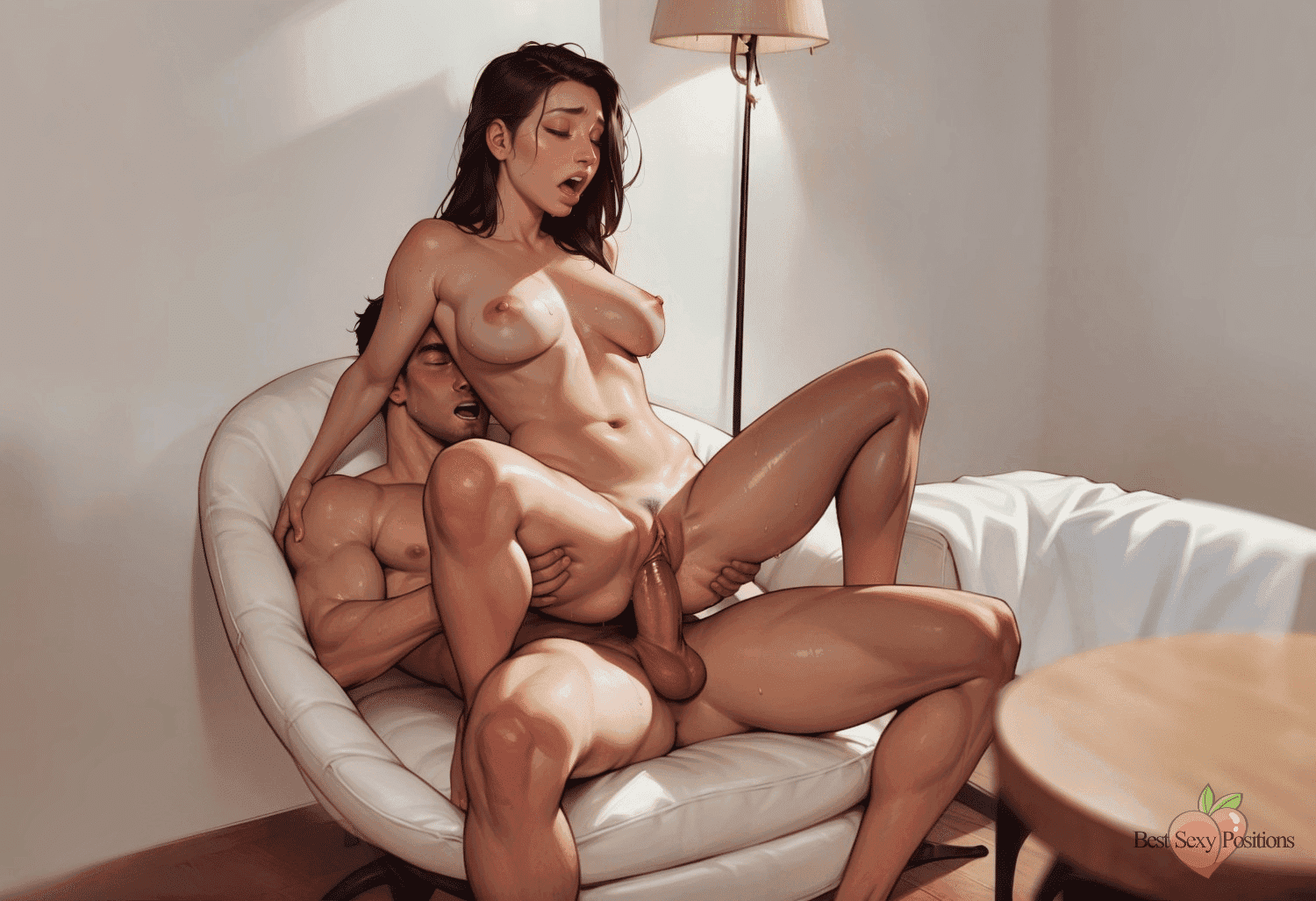
5. Lap Dance Position

Lap Dance uses a chair to change the structural equation: the seated penetrating partner cannot thrust, which means all movement originates with the rider. The chair arms or back serve as grip points. The angle of a standard chair seat tilts the pelvis forward slightly, which can make clitoral grinding against the partner's lap easier than bed versions. Use the seat's edge to adjust how far forward you sit — further forward increases clitoral contact; further back changes depth. It is a good position for pacing because the chair physically limits how much the other person can contribute.
6. Bouncing Spoon Position

Your partner sits against a headboard or wall with legs extended. You face away and sit in their lap, leaning back against their chest. The setup gives you a stable backrest while keeping full control of the bouncing rhythm. Because both of you are partially reclined, the angle naturally tilts toward the anterior wall without requiring a deliberate backward lean. The chest-to-back contact also muffles quad strain — you can sustain this position longer than upright squatting variations. Explore the full setup and angle options in the Bouncing Spoon guide.
7. The Crab Position

From kneeling cowgirl, shift your weight backward and plant your hands behind you, extending both legs forward past your partner's torso. This extreme lean-back opens the angle toward the front vaginal wall to a degree classic cowgirl cannot reach, and also creates a very tight fit because the leg extension closes the space around the shaft. The mechanical payoff is real — the angle is distinct — but it requires shoulder and core stability. Small internal movements are more effective than large bounces. Work up to it with shorter intervals between less demanding positions.
Full setup and positioning tips: Crab position guide.
8. X-Factor Position

Start in reverse cowgirl, then lean forward slowly until your body approaches parallel to your partner's, extending your legs back alongside theirs — the bodies form a rough X shape from above. This creates a very different pressure vector than any upright position: the forward lean with extended legs causes the anterior wall to bear most of the friction, and internal contact is tighter because the hip angle closes. Movement is necessarily small, which makes it a high-sensation, low-effort option once you are in position. It is less about athleticism than about geometry.
Step-by-step setup for this forward-lean variation: X-Rated position guide.
9. Squatting Cowgirl

Plant your feet flat on the bed instead of kneeling, so your legs are in a full squat. This position delivers the most direct vertical force of any cowgirl variation — you control exactly how deep each downward movement goes, and the squat angle gives you strong mechanical leverage. The trade-off is quad and glute fatigue, which arrives quickly for most people. Use it in short bursts rather than as your primary riding style, and rotate to Pearly Gates or Bouncing Spoon between intervals to extend the overall session. Ankle mobility matters here — if your heels lift off the bed, try a folded blanket under each foot.
10. Pearly Gates Position

Pearly Gates is the most sustainable position in this guide. You lie flat on top of your partner — full-body contact — and control the rhythm through small hip grinds rather than bouncing. Because the bodies are flush, every movement creates friction at the clitoris simultaneously with internal contact. It is the closest analog to the coital alignment technique in a woman-on-top position. Use it to recover after more demanding positions, or as the position you stay in for the final stretch when thigh fatigue would otherwise interrupt things.
11. The Acrobat Position

The Acrobat position begins where Pearly Gates ends: lying on top, you lean back further until your back rests against your partner's chest in a reclined reverse posture. This shifts internal pressure sharply toward the anterior wall. The position requires good communication about angle and pressure because the range of comfortable movement is narrower than upright variations — small adjustments matter more here than large ones. It is worth trying specifically for the G-spot angle it creates, not for intensity of motion.
12. Irish Garden Position

Irish Garden inverts the usual setup: your partner sits upright while you straddle them facing forward but lean forward significantly, using the bed or a surface for support. The forward lean with an upright-sitting partner creates an upward angle internally that is particularly useful for pregnant riders, since it removes belly compression entirely and allows good control of depth. The position also works well for extended sessions — the forward lean shifts effort away from the legs and into the arms and core, which tend to fatigue more slowly.
Technique: Grinding vs. Bouncing
Both are valid, but they serve different purposes — slow grinding is the rhythm behind many Kama Sutra positions.
Bouncing (vertical movement) increases depth sensation and is more intense for the penetrating partner. It is higher effort and lower on clitoral contact unless you actively lean forward to maintain pubic-bone contact at the bottom of each stroke.
Grinding (rocking or circular hip movement) maintains continuous pressure at a fixed depth and delivers far more consistent clitoral stimulation. It is lower on quad fatigue and higher on sustained sensation. Most people achieve clitoral orgasm from grinding, not bouncing.
A practical rhythm: start with grinding to build sensation, add short bouncing intervals for intensity variation, return to grinding to finish. The switch keeps fatigue lower and sensation more varied.
For a detailed technique breakdown, see our guide to riding technique and control.
Anatomy and Angle: Why Position Matters
The anterior vaginal wall runs roughly parallel to the belly, 5–8 cm in. Any position that angles the penis or toy upward toward that wall — through backward lean, extended legs, or a seated-partner setup — will increase G-spot contact.
The clitoris is external at the apex; internal stimulation through the vaginal wall can reach its internal roots, but direct surface grinding is more reliable for most people. That is why grinding in cowgirl works: pressing the pubic mound against the partner's pubic bone engages the clitoral shaft and hood with friction rather than relying on internal contact alone.
For more on positions designed specifically around these mechanics, see our guides to G-spot positions and sex positions for orgasm.
Advanced Pairing Techniques
Verbal cues that help: Naming what you feel rather than asking for validation ("that angle, maintain that") gives your partner useful real-time information without breaking rhythm.
Physical control points:
- Press down on your partner's chest or shoulders to stabilize upper-body lean
- Guide their hands to your hips when you want counterweight support, move them away when you want freedom
- A slow complete stop — holding position — creates pressure without movement, which some people find more intense than active motion
Mental focus: The positions that deliver the most reliable sensation are usually the ones where you have narrowed attention to a single variable — a specific angle, a specific rhythm — rather than trying to optimize everything at once.
Safety and Physical Care
For athletic positions (Crab, Squatting Cowgirl, Amazon): Warm up briefly, use lubricant generously, and build session length gradually over multiple encounters rather than pushing to maximum duration on the first try.
For injury prevention: If you feel sharp discomfort in any position, stop. Bruising to the anterior vaginal wall from forceful deep-angle grinding is possible; ease into high-pressure positions. Medical experts note that pain during sex should not be pushed through.
For fatigue management: Keep a low-effort position (Pearly Gates, Bouncing Spoon, Irish Garden) within easy reach of your current position so you can shift without fully stopping. Hydrate if you are running longer sessions — the cardiovascular demand is real.
Consent and communication: Establish a safe word before exploring restraint or high-control dynamics. Check in if your partner is unusually quiet. Good dominant-partner behavior includes monitoring the other person's responses, not just your own.
Bottom Line
Woman on top sex positions work because they give the rider direct, simultaneous access to both clitoral contact and G-spot angle — variables that most other position categories split between two people. The positions in this guide are not interchangeable: each one changes the angle, the effort distribution, or the type of friction in a specific way. Starting with Classic Cowgirl and learning its lean angles will teach you more about your own anatomy than a month of passive experimentation. Build from there.
The riding guide at How to Ride covers bouncing leverage, grinding mechanics, and angle adjustment in more depth. If you want positions organized by orgasm type rather than riding style, our orgasm positions guide is the next step.
Explore by experience level: intermediate sex positions